
SSC Recruitment Post Allocation 2026: The SSC Recruitment Post Allocation 2026 process has introduced a significant update with the implementation of the new Sliding Mechanism. The Staff Selection Commission conducts various national-level examinations such as CGL, CHSL, MTS, and others to recruit candidates for central government departments. With lakhs of candidates competing every year, the post allocation system plays a crucial role in ensuring transparency and fairness. The newly introduced sliding mechanism aims to improve seat utilization and provide deserving candidates with better post preferences based on merit and availability.
Highlights of SSC Sliding Mechanism 2026
| Particulars | Details |
|---|---|
| Conducting Authority | Staff Selection Commission |
| Applicable Exams | CGL, CHSL and other SSC recruitments |
| New System | Sliding Mechanism for Post Allocation |
| Objective | Better seat utilization and merit-based shifting |
| Benefit | Higher preference posts for eligible candidates |
| Transparency | Merit and preference-based allocation |
What is the SSC Sliding Mechanism
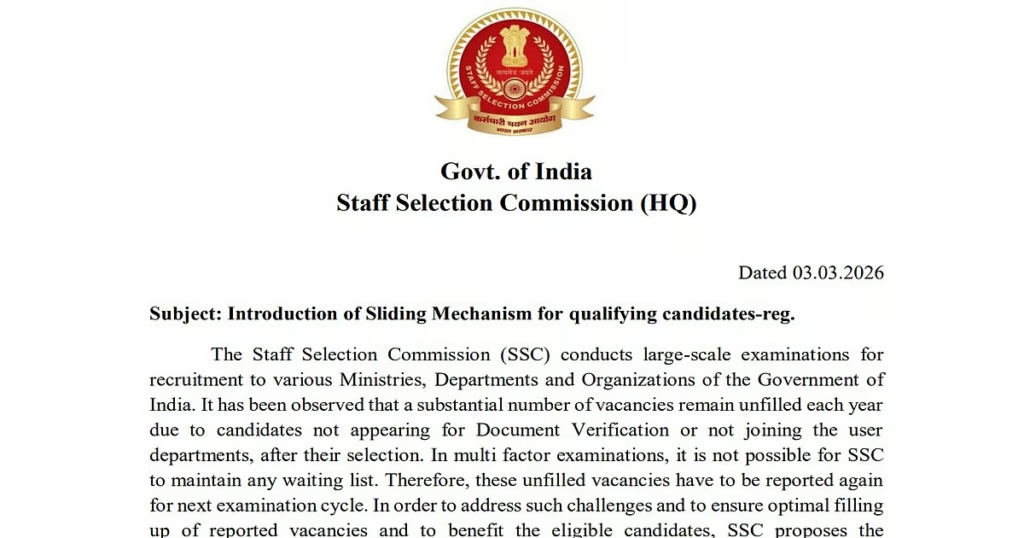
The Sliding Mechanism in SSC Recruitment 2026 is a revised post allocation system where candidates can move to a higher preferred post if vacancies arise after initial allocation. Earlier, once a post was allotted, the candidate could not be upgraded even if higher preference vacancies became available later.
Under the new system, if a candidate who was initially allotted a higher preference post does not join or declines the offer, that vacancy can be offered to the next eligible candidate based on merit and preference order. This ensures that no seat remains vacant unnecessarily and deserving candidates get fair opportunities.
Also read: CBSE 10th Result Date 2026
Why SSC Introduced the Sliding Mechanism
The primary objective of the SSC Post Allocation Reform 2026 is to increase efficiency in government recruitment. In previous years, several vacancies remained unfilled due to non-joining of selected candidates. This led to delays in recruitment cycles and administrative challenges.
The sliding mechanism helps in optimizing vacancies by reallocating posts dynamically. It also enhances transparency because the allocation strictly follows merit rank and submitted post preferences.
How Does the Sliding Mechanism Work
The process begins after the declaration of final results. Candidates submit their post preferences during the application or document verification stage. Based on merit rank and category-wise vacancies, the Commission allots posts in the first round.
If some candidates fail to join or surrender their allocated posts, those vacancies are identified. In the next stage, eligible candidates who had opted for those posts as higher preferences are automatically considered for upgradation. This movement of candidates from lower preference posts to higher ones is known as sliding.
Benefits of the New SSC Post Allocation System
The SSC Sliding Mechanism 2026 offers multiple advantages. It ensures better utilization of government vacancies. It provides deserving candidates an opportunity to secure higher preference posts without reappearing for the examination. It also reduces administrative burden and speeds up the recruitment cycle.
Most importantly, the system strengthens fairness because the entire process is based on merit rank and documented preference order.
Important Points Candidates Should Remember
Candidates must carefully fill their post preference order because the sliding process strictly follows the submitted choices. Once the final allocation process is completed, further changes are generally not allowed.
Candidates should also monitor official notifications for updates regarding joining formalities and upgradation announcements.
Important Links
| Resource | Link |
|---|---|
| Official SSC Website | https://ssc.nic.in |
| SSC CGL Notification | Available on SSC official portal |
| SSC CHSL Notification | Available on SSC official portal |
| Result and Allocation Updates | https://ssc.nic.in |
FAQs About SSC Recruitment Post Allocation 2026
1: What is the main purpose of the SSC Sliding Mechanism 2026?
The main purpose is to ensure better vacancy utilization and merit-based upgradation of posts.
2: Can a candidate refuse an upgraded post under the sliding mechanism?
If rules permit, candidates may decline, but this could affect further allocation opportunities.
3: Does the sliding mechanism apply to all SSC exams?
It is generally applicable to major recruitment exams like SSC CGL and CHSL, as per official notification.
1 thought on “SSC Recruitment Post Allocation 2026: Understanding the New Sliding Mechanism Explained”